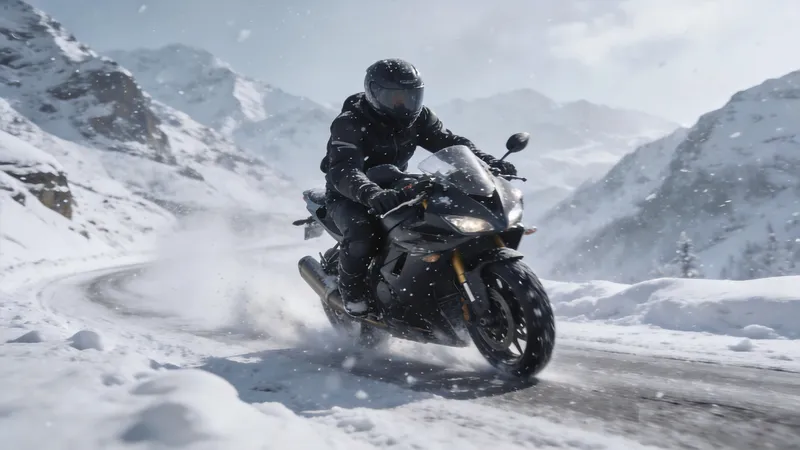
Can You Use a Motorcycle Intercom on a Snowmobile or ATV?
- Motorcycle intercoms work on snowmobiles and ATVs — same helmet mounting principles
- Cold weather drains batteries faster: expect 30–50% less runtime below 0°C
- IP67-rated models (T2 Plus) handle snow and mud better than IPX5/IP65
- Boom mics work with most snowmobile and ATV helmet styles
- MESH is better for off-road group rides — wider spacing between riders
Short answer: yes. Motorcycle intercoms work on snowmobiles, ATVs, and UTVs — the communication technology is identical across all these vehicles. The 2.4 GHz radio signal, Bluetooth pairing, and mesh networking don't care what you're riding.
But the riding environment is very different. Snowmobiles deal with extreme cold, ice fog, and deep powder. ATVs face mud, water crossings, and rough terrain at lower speeds. These conditions change which intercom features matter most.
This guide covers what works, what doesn't, and which SCSETC models are best for each off-road vehicle type.
Why Motorcycle Intercoms Work on Other Vehicles
The communication technology inside a motorcycle intercom is vehicle-independent:
- 2.4 GHz radio frequency: Bluetooth and mesh both operate on 2.4 GHz — a universal wireless standard. The signal transmits the same way whether you're on a motorcycle, snowmobile, ATV, or even a bicycle.
- Helmet-based design: Intercoms mount to helmets, not vehicles. Snowmobile helmets, ATV helmets, and motorcycle helmets share the same full-face or modular design with ear pockets for speakers and visor edges for clamp mounting.
- Same noise challenges: All these vehicles produce engine noise, wind noise, and trail noise. The same noise cancellation algorithms (CVC, DSP) that work on motorcycles work on snowmobiles and ATVs.
- Same communication needs: Group trail riding, passenger conversation, phone calls, and music streaming — the use cases are identical across vehicle types.
The only differences are environmental: temperature, moisture type, and terrain. Let's break those down.
Snowmobile Intercom: Cold Weather Considerations
Snowmobile riding introduces specific challenges that motorcycle riders in warm climates never face:
Battery Performance in Cold Weather
Lithium-ion batteries perform worse in cold temperatures. At -10°C (14°F), a battery that lasts 12 hours at 25°C might only deliver 6–8 hours. At -20°C (-4°F), battery capacity can drop to 50% or less.
Why this happens: Cold temperatures slow the chemical reactions inside the battery. The internal resistance increases, reducing both capacity and output voltage. The battery isn't "dead" — it just can't deliver its full stored energy efficiently.
What to do:
- Charge the intercom to 100% before every ride — don't start with partial charge in cold weather
- Keep the intercom unit as warm as possible: mount it inside the helmet lining rather than on the outer shell if possible
- Carry a portable USB battery pack for mid-ride top-ups
- When you finish riding, remove the intercom and bring it indoors immediately. Don't leave it on the sled overnight in sub-zero temperatures
- If the intercom feels sluggish or unresponsive after cold exposure, warm it up before turning it on. Starting a very cold battery strains the cells
Fog, Frost, and Ice on the Microphone
Snowmobile helmets create a sealed warm environment around your face. When you speak, warm moist breath hits the cold microphone surface — creating condensation, fog, and eventually ice crystals on the mic grille.
What happens: Ice buildup on the mic blocks sound from reaching the microphone element. The other rider hears muffled, fading audio — or nothing at all after 30 minutes of riding in extreme cold.
What to do:
- Position the boom mic slightly away from your direct breath stream — angle it to the side rather than pointing straight at your mouth
- Use a helmet breath box (a plastic deflector that redirects exhaled air away from the visor and mic area)
- Check the mic grille periodically during long rides and gently brush off any frost buildup
- After riding, thaw and dry the intercom completely before storing
Helmet Compatibility for Snowmobiles
Snowmobile helmets are typically full-face with dual visors (clear inner + tinted outer) and breath boxes. This is actually better for intercom mounting than most motorcycle helmets:
- Clamp mount works well: The dual visor system provides a solid edge for clamp mounting. The clamp grips both visor layers securely.
- Deep ear pockets: Snowmobile helmets have thick insulation with well-defined ear pockets — speakers fit easily and stay warm.
- Sealed environment: The closed helmet blocks most wind and cold, making noise cancellation less critical than on a half helmet. CVC is usually sufficient for snowmobile intercom conversations.
ATV Intercom: Mud, Water, and Trail Conditions
ATV riding introduces different challenges from snowmobiles:
Mud and Water Exposure
ATV trails frequently involve mud bogs, water crossings, and standing water on the trail. Your intercom gets hit with mud spray from other riders' tires, water splashes from creek crossings, and dust/debris kicked up by the ATV itself.
What this means for your intercom:
- IP65 rating is essential: Dust-tight + water jet protection. The dust seal prevents mud particles from entering the unit. The water jet protection handles splashes and brief submersion.
- Clean the intercom after every muddy ride: Rinse with a garden hose (IP65-rated), wipe dry, and let air-dry. Don't let mud dry on the mic grille — it clogs the holes permanently.
- Check the charging port: Mud can pack into the Type-C port cover. Clean it before charging — mud in the port causes charging failures and corrosion.
Lower Speed, More Engine Noise
ATVs typically ride at 15–40 mph — much slower than highway motorcycles. Wind noise is less of an issue. But ATV engines produce strong low-frequency rumble (especially utility ATVs with large displacement engines) that can overwhelm intercom audio.
What this means:
- CVC noise cancellation handles the moderate noise environment well for solo riding
- DSP is better for group riding on ATVs because it filters engine rumble more effectively than CVC
- The slower speed means intercom range is less of a concern — 500m range is usually plenty for trail riding
Helmet Types for ATV Riding
ATV riders use a wider variety of helmet styles:
- Full-face helmets: Common for sport ATV riders. Clamp mount works. Same as motorcycle full-face setup.
- Modular (flip-up) helmets: Popular for utility ATV riders who want convenience. Clamp mount works on the visor edge.
- Open-face helmets: Some ATV riders in hot climates prefer open-face. Use adhesive pad mount + boom mic — same as motorcycle half helmet setup. See our half helmet intercom guide.
- No helmet: In jurisdictions where ATV helmets aren't required, some riders go helmetless. An intercom unit can't mount without a helmet surface. If you ride without a helmet, consider the BC01 or BC02 bicycle intercom models with handlebar-mounted speakers.
Cross-Vehicle Compatibility: Using One Intercom Across Multiple Vehicles
Many riders own both a motorcycle and a snowmobile, or an ATV and a UTV. Can one intercom serve all your vehicles?
Yes — with one condition: You need to use the same helmet type across vehicles, or have compatible mounting options for different helmet styles.
- Same helmet across vehicles: If you use a modular helmet on your motorcycle and the same helmet on your snowmobile, the intercom transfers seamlessly. Unclamp it, move it to the other helmet, reclamp. Two minutes.
- Different helmets, adhesive mount: If you have different helmets for each vehicle, use adhesive pad mounts on all of them. The intercom unit slides off one pad and onto another. Keep spare adhesive pads handy.
- Group intercom advantage: The T2 Plus group network connects automatically — no re-pairing needed when you switch vehicles or ride with different groups. This is especially useful for riders who do motorcycle rides in summer and snowmobile trips in winter with different riding companions.
Best SCSETC Models for Snowmobile and ATV
For Snowmobile Group Riding
Recommended: T2 Plus mesh intercom
| Feature | Why It Matters for Snowmobile |
|---|---|
| Mesh networking (DMC) | Auto-connect, no re-pairing in cold weather when fingers are stiff |
| IP65 | Dust-tight + water jet protection handles snow, ice, and powder |
| DSP noise cancellation | Filters engine + wind noise at trail speeds |
| Dynamic range extension | Group range expands as more sleds join — critical for spread-out trail groups |
| Music sharing | Share trail playlists with the group |
For ATV Trail Riding
Recommended: S9XM for 2 riders or T2 Plus for groups
The S9XM is ideal for ATV riding with a passenger or one other rider. Bluetooth point-to-point is sufficient for most ATV scenarios (2 riders, close range). DSP handles engine rumble. IP65 handles mud and water.
For ATV group trail riding with 3+ riders, the T2 Plus mesh is better — auto-connect means no fiddling with pairing buttons on muddy trails, and the self-healing network keeps everyone connected even when riders spread out across the trail.
For Solo ATV/Snowmobile Riders
Recommended: S7X
If you ride solo and only need music, phone calls, and GPS audio, the S7X is the simplest option. CVC handles moderate noise. IP65 protects against mud and snow. Bluetooth 5.3 gives stable phone connection. Compact size and adhesive pad mount make it easy to transfer between helmets.
Cold Weather Riding Tips for Intercoms
- Warm the battery before riding: Keep the intercom indoors until you're ready to ride. Don't leave it on the snowmobile or ATV overnight.
- Carry a USB battery pack: Cold weather drains batteries faster. A 5000 mAh portable charger can extend your ride by 4–6 hours.
- Use a breath box on your helmet: Prevents fog and ice on the microphone — critical for snowmobile riding.
- Angle the boom mic away from your breath: Reduce condensation on the mic grille.
- Check mic frost every 30 minutes: Brush off ice gently with your finger. Don't use sharp objects — you can puncture the mic element.
- Rinse off mud immediately after ATV rides: Don't let mud dry on the intercom. IP65 handles hose rinsing.
- Dry completely before charging: Moisture in the charging port causes shorts. Air-dry 24 hours after wet rides.
- Store at room temperature: Between rides, keep the intercom at 15–25°C. Don't store in freezing garages or damp basements.
FAQ
Do I need a special "snowmobile intercom"?
No. There's no such thing as a "snowmobile-specific" intercom — the communication technology is the same. What matters is choosing a model with the right features for cold conditions: IP65 protection, DSP noise cancellation, mesh networking for groups, and good battery management in cold weather.
Will my intercom freeze and stop working?
The electronics inside an intercom don't freeze — they operate down to -20°C or lower. The two cold-weather problems are: (1) battery capacity drops significantly below 0°C, and (2) moisture from your breath freezes on the mic grille. Both are manageable with the tips above. The intercom unit itself won't malfunction from cold.
Can I use the same intercom for summer motorcycle and winter snowmobile?
Yes. Move the intercom unit between helmets using adhesive pad mounts on each helmet. With mesh intercom (T2 Plus), you don't even need to re-pair — the network connects automatically when you turn it on near other mesh units. This makes seasonal switching effortless.
What about UTV (side-by-side) riding?
UTVs have a cabin, so helmet intercoms aren't the typical solution. UTV riders usually use cabin-mounted communication systems. However, if you ride a UTV with doors removed or in open configurations, a helmet intercom works the same as on an ATV. The SCSETC models recommended for ATV riding apply to UTVs too.
The Bottom Line
Motorcycle intercoms are vehicle-agnostic — they work on anything with a helmet. The technology doesn't change. What changes is the environment:
- Snowmobile: Cold weather battery drain + mic frost. Choose T2 Plus mesh for groups, manage battery and mic frost.
- ATV: Mud + water + engine rumble. Choose S9XM for 2 riders, T2 Plus for groups, rinse after muddy rides.
- Cross-vehicle: Use adhesive pad mounts on multiple helmets. Mesh intercom auto-connects across seasons.
One intercom, multiple vehicles. That's the advantage of helmet-based communication — it travels with you, not with the machine.
Need help choosing an intercom for your off-road vehicle? Contact us — we'll recommend the best model for your riding conditions.