Waterproof Motorcycle Intercom Guide: IP Ratings Explained
- IP ratings: first digit = dust (0–6), second digit = water (0–9K)
- IPX4: splash-proof only — not enough for regular rain riding
- IP65: dust-tight + water jets — the sweet spot for most riders (SCSETC S13, S10X)
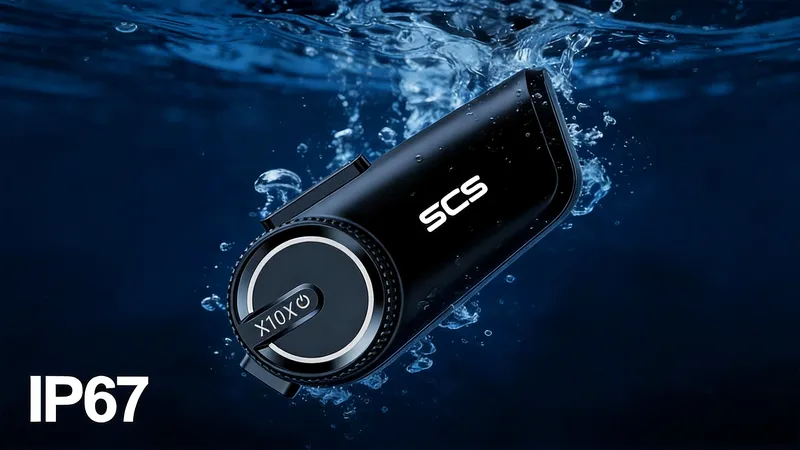
- IP67: dust-tight + immersion — for adventure riders and extreme conditions (SCSETC T2 Plus)
- Don't charge a wet intercom — dry thoroughly before plugging in
You've seen the labels — IPX4, IP65, IP67 — printed on intercom packaging and product pages. But what do they actually mean for a rider caught in a thunderstorm at 70 mph? Is IPX4 enough? Do you need IP67? And what's the difference between water-resistant and waterproof?
This guide decodes IP ratings so you can choose an intercom that won't die when the weather turns.
What Is an IP Rating?
IP stands for Ingress Protection — an international standard (IEC 60529) that classifies how well a device seals against solids (dust, dirt) and liquids (water). Every IP rating has two digits:
- First digit (solid protection): 0–6, rating how well the device blocks dust and solid objects
- Second digit (liquid protection): 0–9, rating how well the device blocks water ingress
When you see "IPX4", the X means the device was not tested for solid protection (or the rating wasn't claimed). The 4 tells you the liquid protection level.
IP First Digit: Dust Protection (0–6)
| Rating | What It Means | Riding Implication |
|---|---|---|
| 0 | No protection against dust | Dust enters freely — not suitable for off-road |
| 1 | Blocks objects >50mm | Prevents large debris, not dust |
| 2–4 | Blocks progressively smaller objects | Some debris protection, dust still enters |
| 5 | Dust-protected (limited ingress) | Most dust blocked, fine particles may enter |
| 6 | Dust-tight (no ingress) | Complete dust seal — off-road and desert ready |
For motorcycle riding, dust protection matters most for off-road and adventure riders who encounter fine dirt and sand. On-road riders face less dust exposure, but road grime and exhaust particles still accumulate over time. IP6X (dust-tight) is the gold standard for long-term durability.
IP Second Digit: Water Protection (0–9K)
| Rating | What It Means | Riding Implication |
|---|---|---|
| 0 | No water protection | Don't ride in any rain |
| 1 | Vertical dripping water | Very light drizzle only |
| 2 | Dripping water tilted 15° | Light rain, bike parked upright |
| 3 | Spraying water up to 60° angle | Moderate rain at low speed |
| 4 | Splashing water from any direction | Rain riding at moderate speed, water splashes |
| 5 | Water jets from any direction | Heavy rain, hose cleaning, road spray |
| 6 | Powerful water jets | Extreme rain, high-pressure wash (with care) |
| 7 | Immersion up to 1m for 30 min | Accidental submersion, puddle drops, floods |
| 8 | Immersion beyond 1m (manufacturer specified) | Extended submersion — overkill for riding |
The Three Ratings You'll Actually See on Intercoms
Most motorcycle intercoms fall into three IP categories. Here's what each means for real-world riding:
IPX4 — Splash Protection
What it handles: Water splashing from any direction — light rain, road spray from passing cars, sweat.
What it doesn't handle: Heavy sustained rain at highway speed, water jets, immersion.
Riding reality: IPX4 is adequate for fair-weather riders who occasionally get caught in light rain. At highway speed in a downpour, the constant water volume exceeds IPX4's capacity. Water can seep through seams and ports over time.
Verdict: Acceptable for casual riding in dry climates. Not reliable if you ride regularly in rain.
IP65 — Dust-Tight + Water Jet Protection
What it handles: Complete dust sealing (6) plus water jets from any direction (5). This means heavy rain at highway speed, road spray, sweat, and you can rinse the intercom with a hose after a muddy ride.
What it doesn't handle: Full submersion — don't drop it in a deep puddle or lake.
Riding reality: IP65 is the sweet spot for most motorcycle riders. It handles the real-world scenarios you'll encounter: heavy rain, water spray from trucks, dusty roads, and post-ride cleaning. The dust-tight seal also means internal components stay clean over years of use — no dust buildup on contacts or speaker mesh.
Verdict: The best all-around rating for on-road and light off-road riding. This is what most SCSETC intercoms offer.
IP67 — Dust-Tight + Immersion Protection
What it handles: Everything IP65 handles, plus accidental immersion up to 1 meter for 30 minutes. Drop it in a puddle, ride through a flooded underpass, leave it on a wet surface — it survives.
What it doesn't handle: Extended submersion beyond 1 meter, high-pressure water jets (IPX6/IP66).
Riding reality: IP67 is for riders who face extreme conditions — adventure riders crossing streams, riders in tropical climates with sudden monsoons, or anyone who's accidentally left their intercom sitting in water. It's insurance against worst-case scenarios.
Verdict: Worth it if you ride in extreme weather or off-road conditions where immersion is possible. For most street riders, IP65 is sufficient.
IP65 vs IP67: Which Do You Need?
| Scenario | IP65 | IP67 |
|---|---|---|
| Heavy rain at highway speed | ✅ Handles it | ✅ Handles it |
| Road spray from trucks | ✅ Handles it | ✅ Handles it |
| Dusty off-road trails | ✅ Dust-tight | ✅ Dust-tight |
| Hose-down cleaning | ✅ Handles it | ✅ Handles it |
| Accidental puddle drop | ❌ May not survive | ✅ Survives 30 min submerged |
| Riding through flooded roads | ❌ Risk of damage | ✅ Handles brief immersion |
| Stream crossing (adventure) | ❌ Risk of damage | ✅ Handles brief immersion |
The practical difference: IP65 covers everything you'll encounter in normal street riding. IP67 adds a safety margin for immersion accidents and extreme weather. If you ride primarily on-road, IP65 saves money and delivers the protection you need. If you're an adventure rider or live in a monsoon climate, IP67 is worth the upgrade.
"Water-Resistant" vs "Waterproof" — Know the Difference
These terms are not interchangeable:
- Water-resistant: The device can resist some water exposure but is not sealed against sustained or high-pressure water. IPX4 through IP54 are water-resistant ratings.
- Waterproof: The device is sealed against water ingress under specified conditions (depth, duration, pressure). IP67 and above are genuinely waterproof — but only within their rated parameters.
A "waterproof" IP67 intercom is waterproof at 1-meter depth for 30 minutes. It is NOT waterproof at 10-meter depth or under high-pressure water jets. The rating specifies exact conditions — beyond those, water can still enter.
Marketing trap: Some brands advertise "waterproof" without specifying an IP rating. Without the IP number, you have no way to verify what "waterproof" actually means. Always look for the specific IP rating.
SCSETC Intercom IP Ratings by Model
| Model | IP Rating | Dust Protection | Water Protection | Best Riding Conditions |
|---|---|---|---|---|
| S7X | IP65 | Dust-tight | Water jets | On-road, heavy rain, daily commuting |
| X1 | IP65 | Dust-tight | Water jets | On-road, city riding, moderate rain |
| S9XM | IP65 | Dust-tight | Water jets | On-road, touring, group riding in rain |
| S10X | IP65 | Dust-tight | Water jets | On-road, touring, music sharing in rain |
| T2 Plus | IP65 | Dust-tight | Water jets | On-road, mesh group riding, heavy rain |
| S13 | IP65 | Dust-tight | Water jets | On-road, mesh intercom, all-weather riding |
All SCSETC intercoms carry IP65 — dust-tight and protected against water jets. This rating covers heavy rain, road spray, dust exposure, and hose-down cleaning. It's the right protection level for the vast majority of motorcycle riding conditions.
What IP Ratings Don't Protect Against
IP ratings test laboratory conditions — controlled water pressure, specified angles, set durations. Real riding introduces factors the IP standard doesn't cover:
- Sustained high-speed water exposure: Riding at 80 mph through heavy rain creates water pressure that exceeds IP65's test parameters. The intercom will likely survive, but it's operating beyond its rated capacity.
- Temperature cycling: Repeated heating and cooling can degrade rubber seals over years. An IP65-rated intercom that's been through 500 ride cycles may not seal as well as a new one.
- Charging port exposure: The Type-C charging port is typically the weakest seal point. Keep the port cover closed during rain rides. Don't charge a wet intercom — water in the port can short the charging circuit.
- Chemical exposure: Bug spray, fuel, and cleaning chemicals can degrade seal materials. Avoid spraying chemicals directly onto the intercom unit.
Practical Tips for Riding in Rain with Your Intercom
- Keep the charging port cover sealed: The most common water ingress point is the Type-C port. Make sure the cover is closed before riding in rain.
- Dry the intercom after wet rides: Remove it from the helmet, wipe dry with a soft cloth, and let it air-dry completely before charging. Don't shake it — that can drive water deeper into seams.
- Don't charge a wet intercom: Water in the charging port can cause a short circuit. Always dry the port area thoroughly before plugging in.
- Avoid high-pressure washing directly: Even IP65-rated devices can be damaged by concentrated high-pressure water from a pressure washer. Rinse gently with a hose or hand-wash instead.
- Inspect seals annually: Check the rubber gaskets around buttons and ports for cracking or deformation. Aging seals are the most common cause of water damage on older intercoms.
- Use a helmet cover in extreme rain: A waterproof helmet cover adds another layer of protection for both your helmet and the intercom unit during sustained downpours.
FAQ
Can I wash my IP65 intercom with a hose?
Yes — IP65 is rated for water jets from any direction. A standard garden hose at moderate pressure is within the IP65 rating. Avoid pressure washers, which produce concentrated jets that exceed IP65 test parameters.
My intercom got soaked and now sounds weird. Is it permanently damaged?
Not necessarily. If water entered the speaker or microphone, it can cause temporary audio distortion. Remove the intercom, dry it thoroughly (air dry for 24–48 hours, don't use heat), and test again. If audio is still distorted after complete drying, the water may have corroded internal contacts — contact after-sales support.
Do I really need IP65 if I don't ride in rain?
Yes, for two reasons: (1) Road spray from other vehicles can hit your intercom even on dry roads after rain. (2) The dust-tight seal (first digit 6) protects internal components from long-term dust and grime accumulation, extending the intercom's lifespan. IP65 isn't just about rain — it's about overall durability.
Why don't more intercoms offer IP67?
IP67 requires more expensive sealing engineering (O-ring gaskets, potting compounds, sealed connectors). For most street riding, IP65 provides sufficient protection at a lower cost. IP67 adds cost for a scenario most riders rarely encounter (full submersion). Brands like SCSETC focus on IP65 because it covers 95% of real riding conditions.
The Bottom Line
IP ratings are not marketing fluff — they're engineering specifications that tell you exactly what your intercom can survive. The key takeaway:
- IPX4: Fair-weather riding, occasional light rain. Not enough for regular rain riders.
- IP65: The right rating for most riders — heavy rain, road spray, dust, and hose cleaning. All SCSETC intercoms carry this rating.
- IP67: For adventure riders and extreme conditions — adds immersion survival for the worst-case scenarios.
Don't overpay for IP67 if you're a street rider — IP65 covers your needs. Don't settle for IPX4 if you ride in rain — it won't protect your investment. And always check the actual IP rating number, not just the word "waterproof" on the box.
Need help choosing the right intercom for your riding conditions? Contact us — we'll recommend the best match for your climate and riding style.